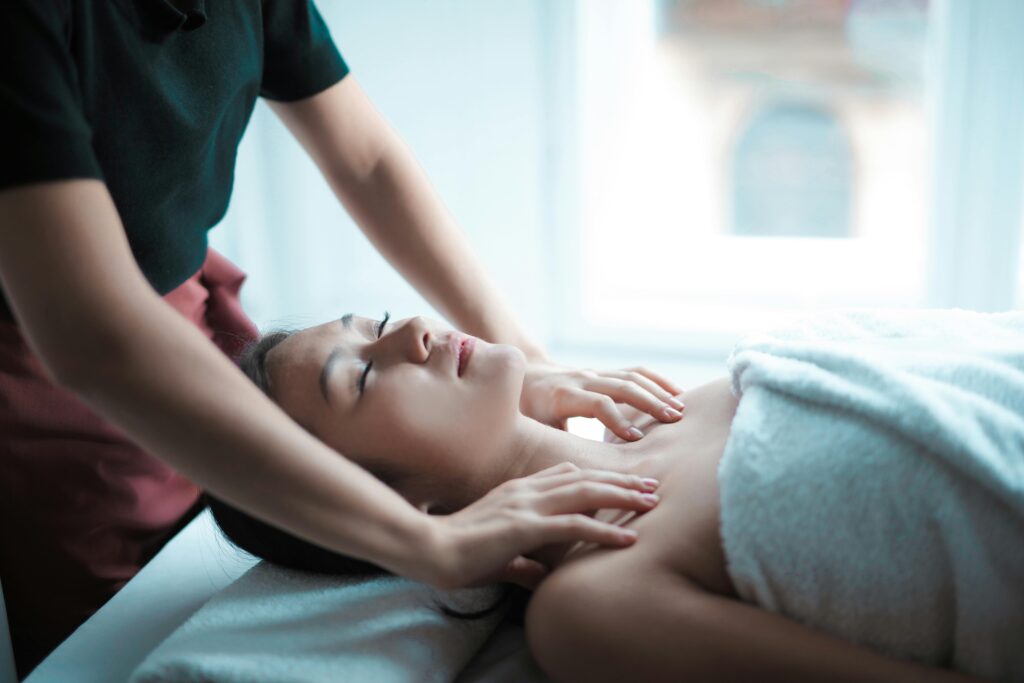
When you’re caring for someone through illness, your focus naturally turns outward to appointments, comforting your loved one, and small daily acts of love. Over time, it can be easy to forget that your body and spirit also need tending.
Caregiving is a full-time emotional and physical effort. The constant vigilance, decision-making, and emotional weight can lead to fatigue, tension, and burnout. You may find yourself holding your breath, clenching your shoulders, or feeling like there’s never a true pause.
Massage offers a rare and necessary opportunity to receive care. To let someone else hold space for you.
Oncology-trained massage therapists understand the unique challenges faced by both patients and caregivers. Sessions are designed with gentleness, safety, and compassion in mind. The intention is not just physical relief, but emotional replenishment: a moment to reconnect with your own well-being.
If you’ve been giving endlessly, it’s okay to rest. You deserve a soft place to land.
If you’d like to learn more about caregiver massage or schedule a time for yourself, visit View our Schedule or reach out Contact Us
Supportive care for those in treatment, recovery, and survivorship.
Cancer changes the body, sometimes for a while, sometimes permanently. Regardless of whether you are in treatment, in recovery, or living as a long-term survivor, the physical and emotional effects of cancer care do not simply disappear once all the appointments stop. Your body deserves touch that understands those changes.
Massage Designed for You
Oncology massage isn’t a special technique or type of pressure. It’s an approach that is clinically sensitive, flexible and safe. Therapists trained in this field are familiar with the side effects and medical realities that accompany cancer and its treatments, and they know how to modify every detail of the session to fit where you are.
This might mean shortening the session time, avoiding certain areas of the body, using positioning supports for comfort, or focusing on just one or two areas that need attention. We understand how surgery, chemotherapy, radiation, and targeted therapies can affect the body long after treatment ends.
Understanding Mobility and Scar-Related Limitations
After surgery, particularly with breast, abdominal, or pelvic cancers, survivors may have limited mobility, the feeling of tightness or pain due surrounding the surgery sites. Radiation therapy can also cause long-term tissue changes that make certain movements or positions uncomfortable.
An oncology-trained massage therapist knows how to:
Work with surgical scars gently and respectfully, without overstimulating fragile or tight tissues
Accommodate limited mobility, such as shoulder restriction after mastectomy or lymph node removal
Use gentle positioning and bolstering to ease strain during the session
• Avoid overstretching or straining areas with recent surgery, lymphedema, or bone metastasis
The session isn’t just about feeling good during the massage, though that helps! It is about facilitating your functional comfort and assisting you to reconnect with ease in your body.
More Than Muscles: Understanding the Nervous System
Cancer treatment leaves many people with persistent fatigue, anxiety, hypervigilance, or even medical trauma. Oncology massage therapists learn to observe these cues and establish an experience that is safe, grounded, and respectful of your limits.
Sessions may be modified to include extra time for rest or silence
Pressure and touch style that are adjusted to avoid overstimulation
The therapist checks in regularly to ensure you feel in control and comfortable
You are never expected to tolerate or endure discomfort. Please let your therapist know if you’re uncomfortable. The session moves at your pace.
Collaboration With Your Medical Team
If you’re actively undergoing treatment, an oncology-trained massage therapist can work with your care plan, not against it. We understand how to safely navigate:
Low white or red blood cell counts
Medical devices such as ports, ostomies, or drains
Neuropathy and circulation issues
Lymphedema precautions
Bone fragility due to metastases or certain medications
This level of awareness minimizes risks while increasing the effectiveness of the care you receive.
Massage as Ongoing Support
Whether you’re seeking:
A calm moment between chemo cycles
Help managing post-treatment fatigue
Support as you navigate a new phase with your body
A space to rest, breathe, and feel like yourself again
an oncology-trained massage therapist can offer care that’s genuinely supportive, safe, and trauma-informed.
You don’t need to be finished with treatment to start receiving comfort. And you don’t need to be in crisis to deserve care. This work is about being held in the in-between spaces, the place where healing often happens.
If you’re living with cancer, recovering, or adjusting to a new normal after treatment, I’d be honored to support you.
In our fast-paced world, where time is never on our side, taking time to rest and recuperate is not a luxury, it’s self-care. Relaxation massage is often seen as simple or basic, but the truth is, there are deeper effects than you might realize.
Relaxation massage is all about calming the central nervous system. It can help relax tight muscles, calm the mind, and help the body recover through gentle touch and rhythmical strokes. It is one of the few moments when many you can just lie relaxed, breathe, and have someone else take care of you.
Focused Care Where You Need It
Although the basis of a relaxation massage is full-body tranquility, that doesn’t mean we ignore spots that are calling for attention. If you’re dealing with chronic neck tension, low back discomfort, or other common sore spots, problem areas can be addressed within the flow of the session. Close attention does not necessarily imply deep-pressure: a slower speed, mindful touch, and an extra few minutes in the appropriate location can be deeply helpful without added agitation. This technique can be particularly useful to individuals dealing with chronic pain, stress-related tension, or who may be in treatment or recovery. It is aimed at soothing, not forcing.
What Are the Benefits?
Relaxation massage offers a range of benefits, including:
Better sleep
Lower stress levels
Reduced anxiety
Gentle support for pain and fatigue
Improved circulation and body awareness
Many clients report feeling lighter, more open, both physically and emotionally. It’s not magic. This happens naturally when you feel safe, supported, and allowed to rest.
Who Is It For?
Anyone can benefit from a relaxation massage. No matter what challenge you are facing, whether it is a stressful time in your life, illness, or you feel that you need a break or just to unplug, this kind of touch can meet you where you are. It is also suitable for those receiving medical care, after surgery, or for someone living with a long-term medical condition. Every session is tailored to your needs at the time of the visit.
It’s Okay to Just Rest
There’s nothing to prove here. No need to be productive or work through pain. You’re allowed to take up space and be cared for.
If that sounds like something your body is asking for, I’d love to welcome you to the table.